Peterborough Fire Station No. 2
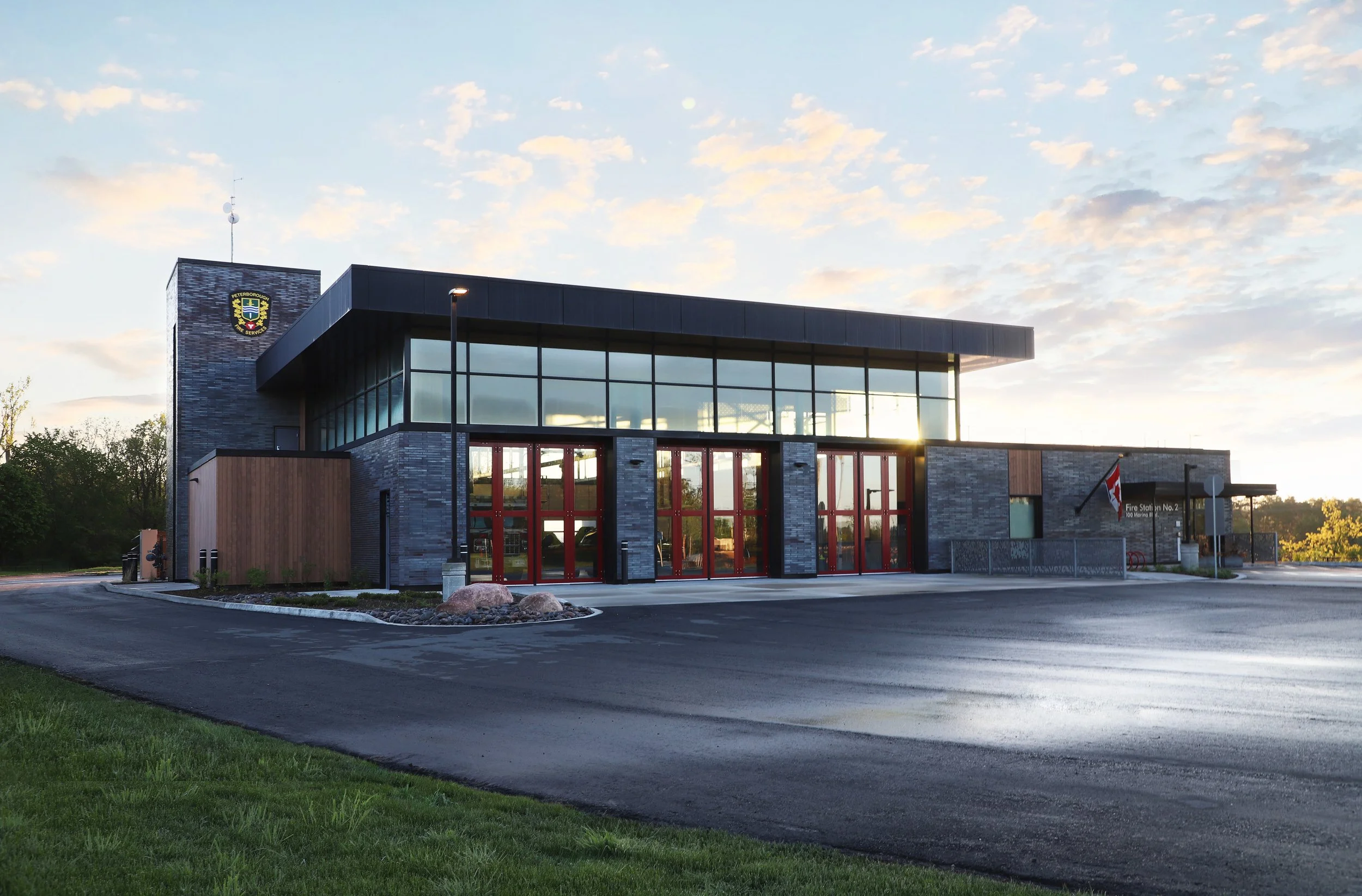
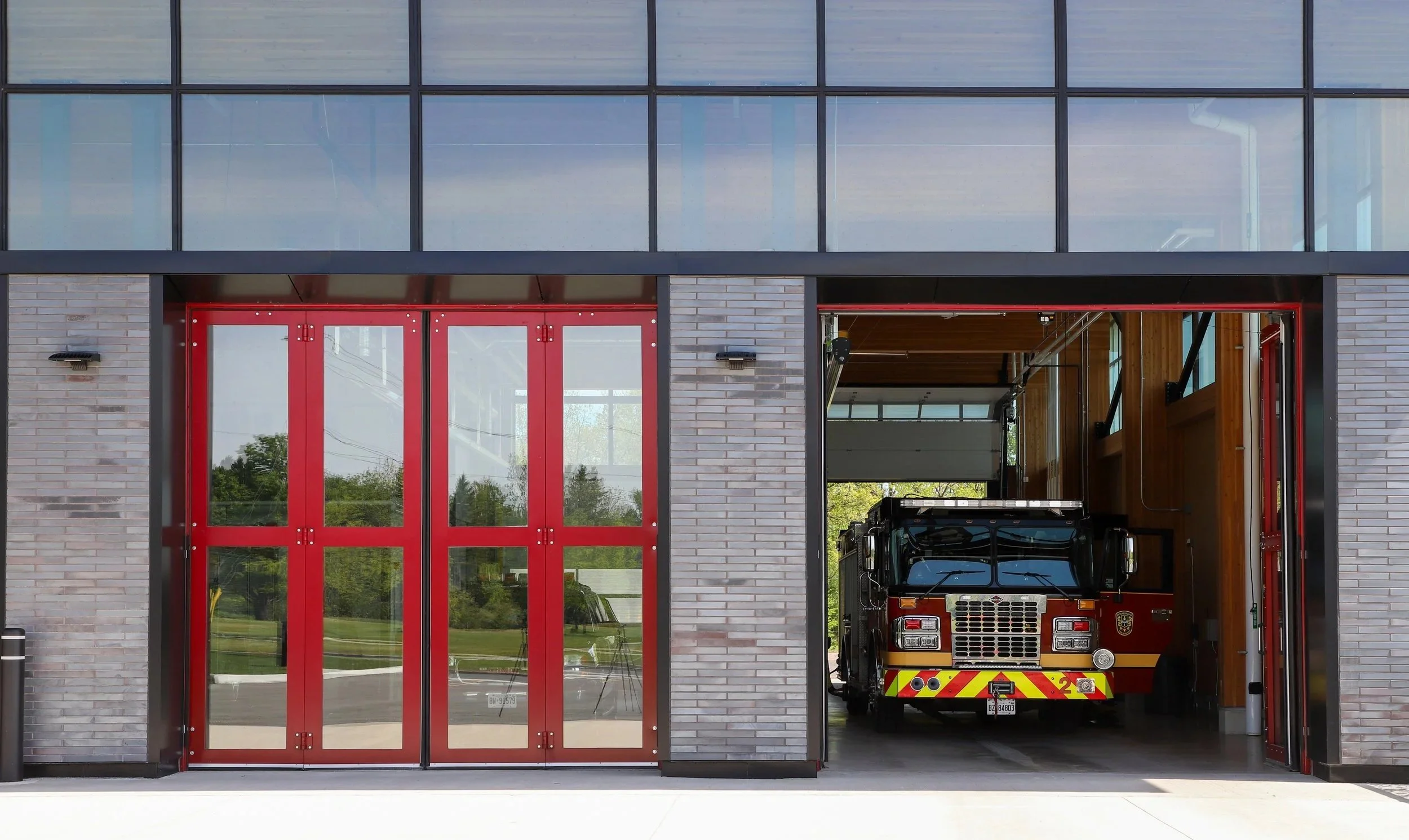
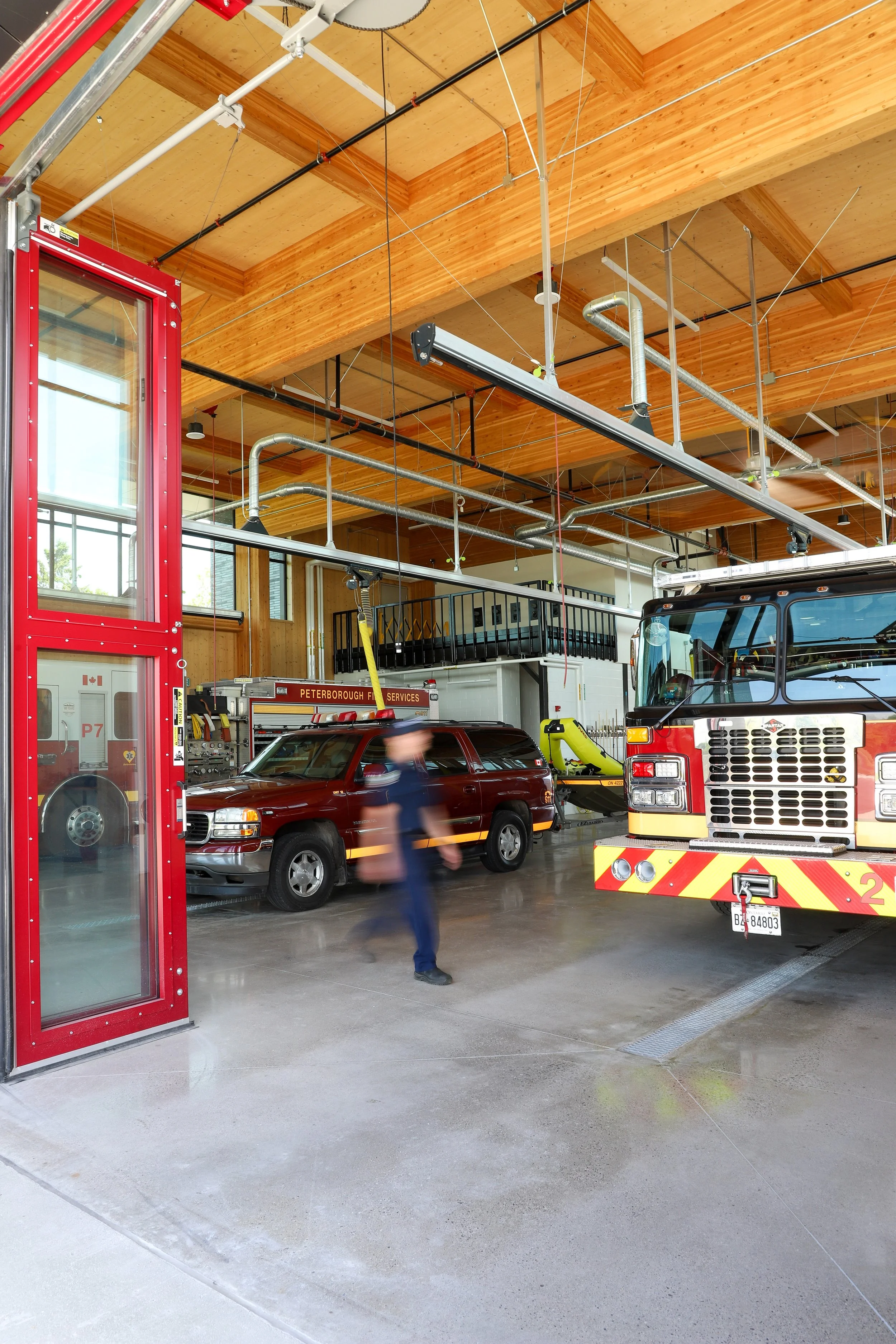
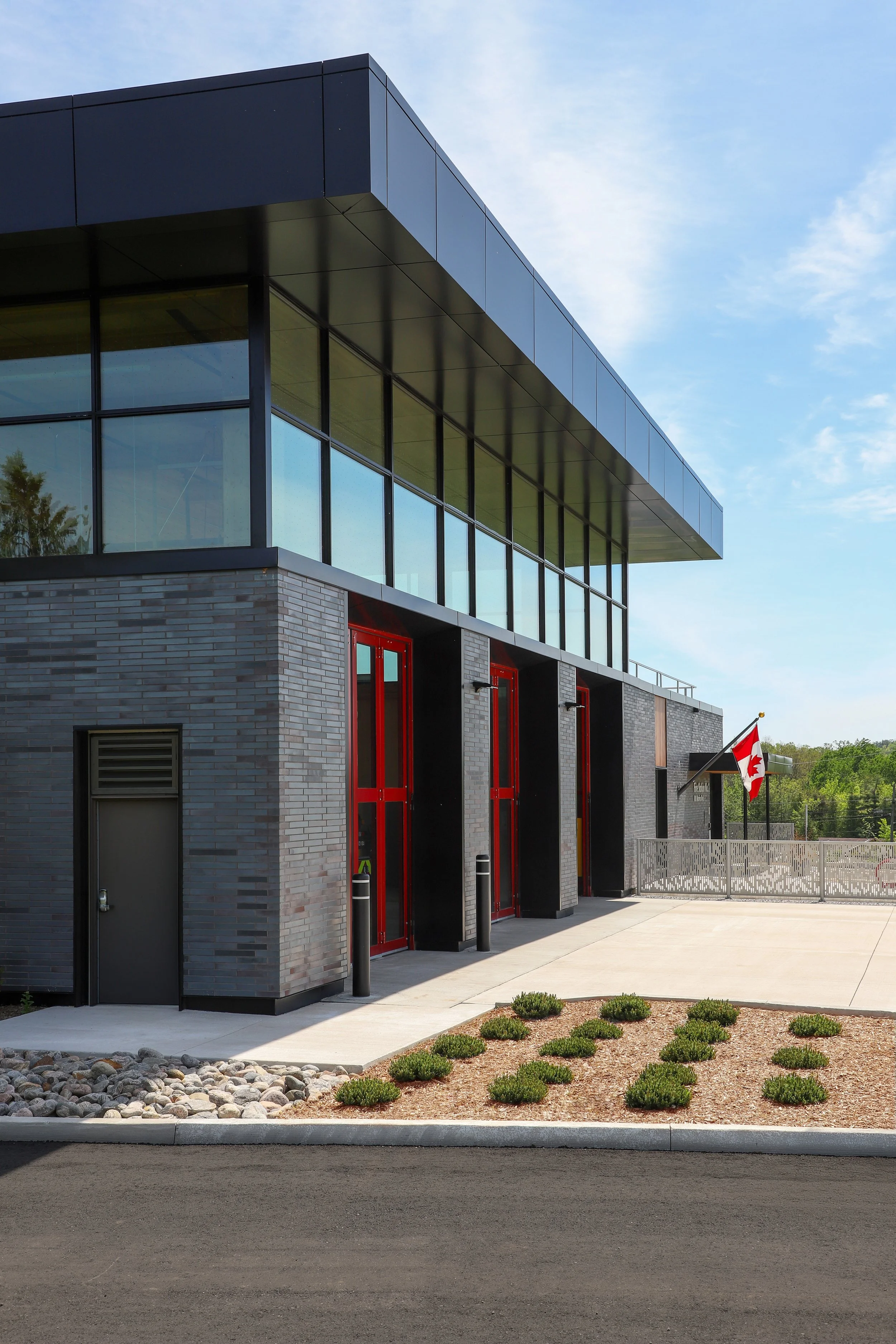
Peterborough Fire Station No. 2 is a resilient, mass timber fire station designed for net-zero energy performance and post-disaster operation.
More than an emergency facility, it is a purpose-built environment that supports firefighter health, community connection, and long-term value.
| Location |
| Peterborough, ON |
| Client |
| City of Peterborough |
| Completed |
| 2024 |
| Size |
| 11,000 sq. ft. |
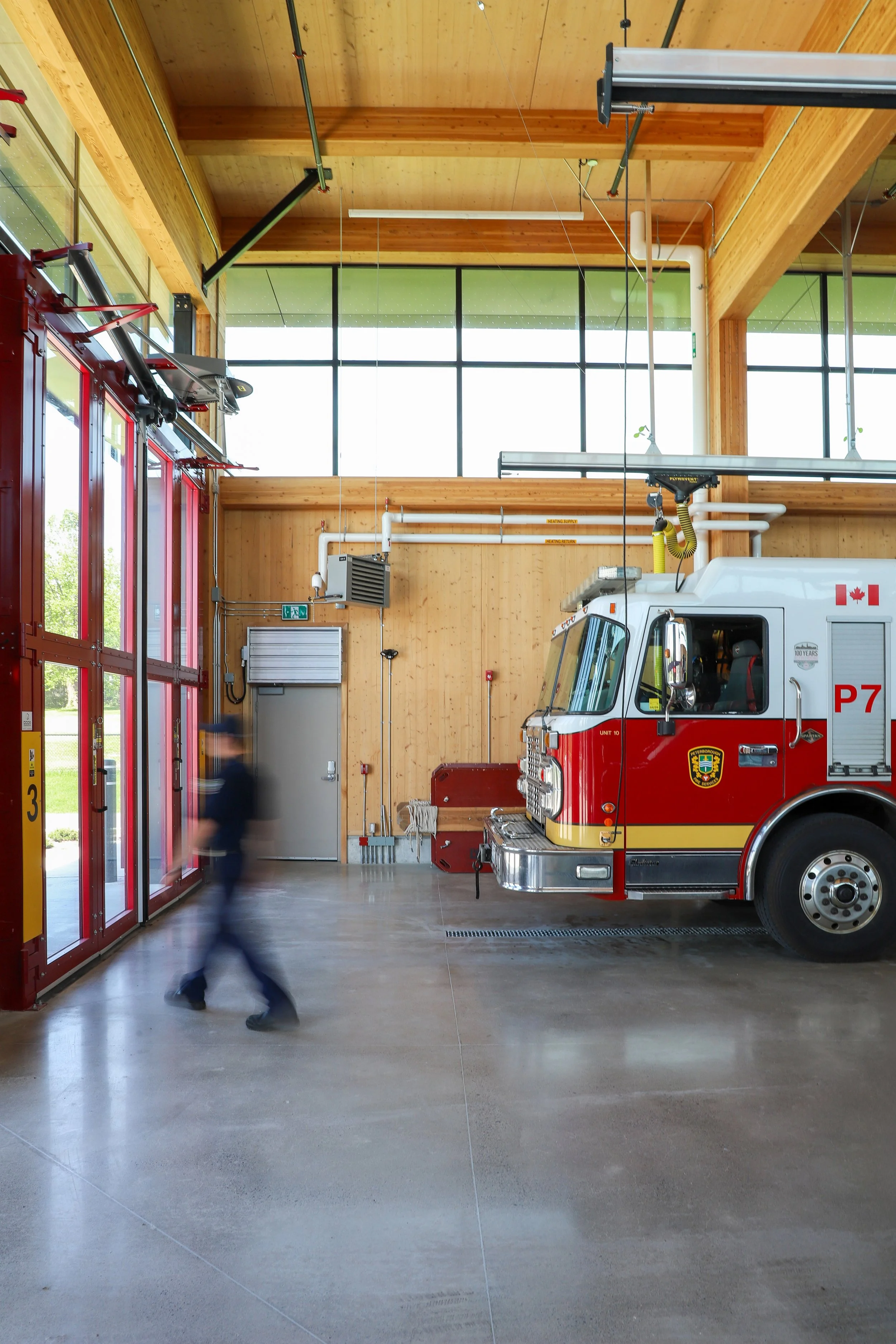
Spaces that Restore and Prepare
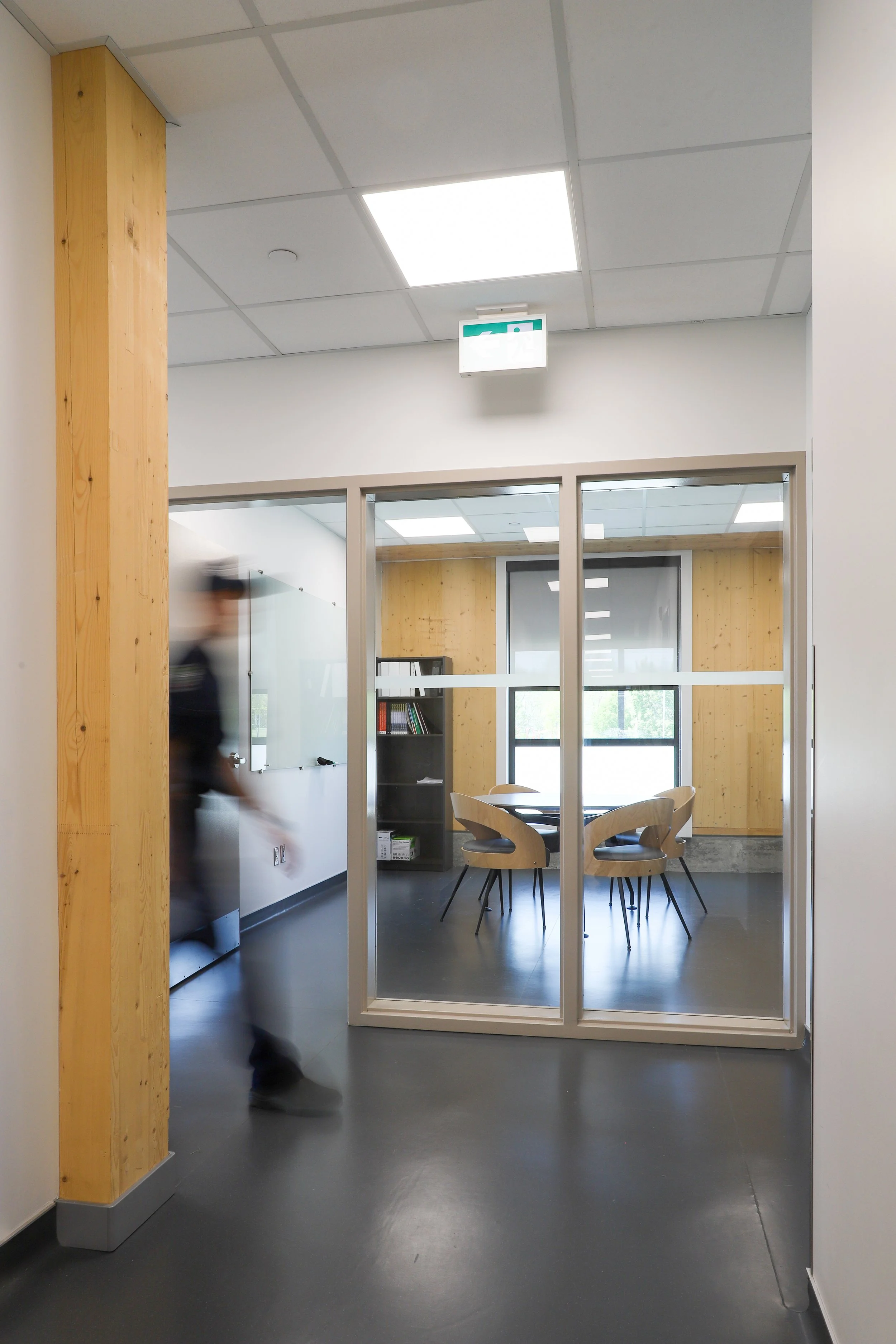
Firefighters move through long shifts, unpredictable calls, and constant readiness. Their building needed to support that rhythm from the inside out. The interior is organized around moments of rest and recovery so that staff can reset, refocus, and return prepared.
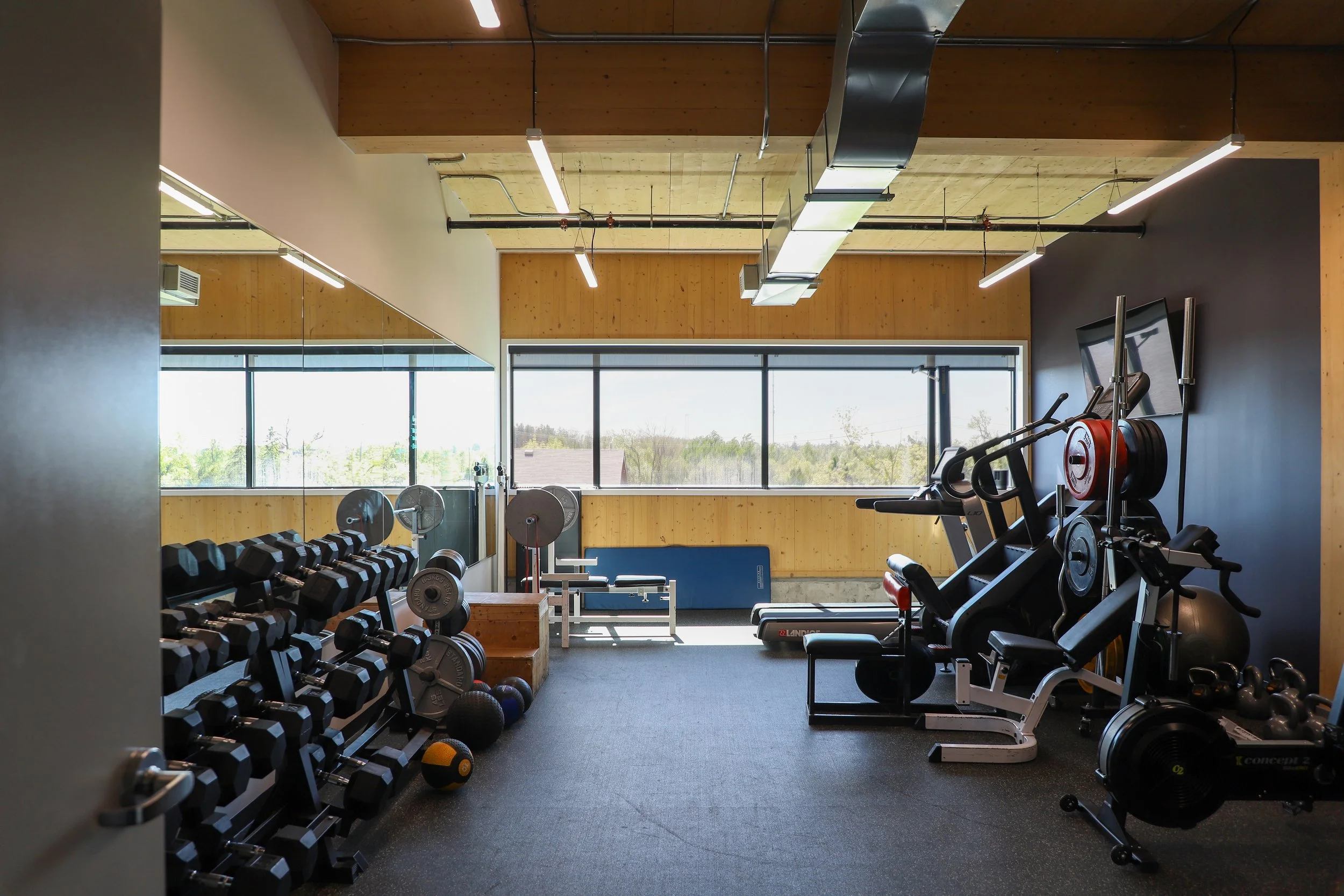
Quiet dormitories offer genuine respite. A dedicated fitness room and sauna give firefighters space to recover after demanding work. Daylight is used intentionally, bringing softness into lounges, study areas, and shared spaces without glare. Mass timber surfaces make the interior feel grounded and warm, a counterbalance to the intensity of emergency response.
Air quality plays a central role. The building uses MERV-13 filtration and balanced mechanical ventilation that exceeds standards, creating a healthy environment even at peak activity. These layers of care add up. They create a workplace that feels safe, calm, and supportive for the people who protect the city.
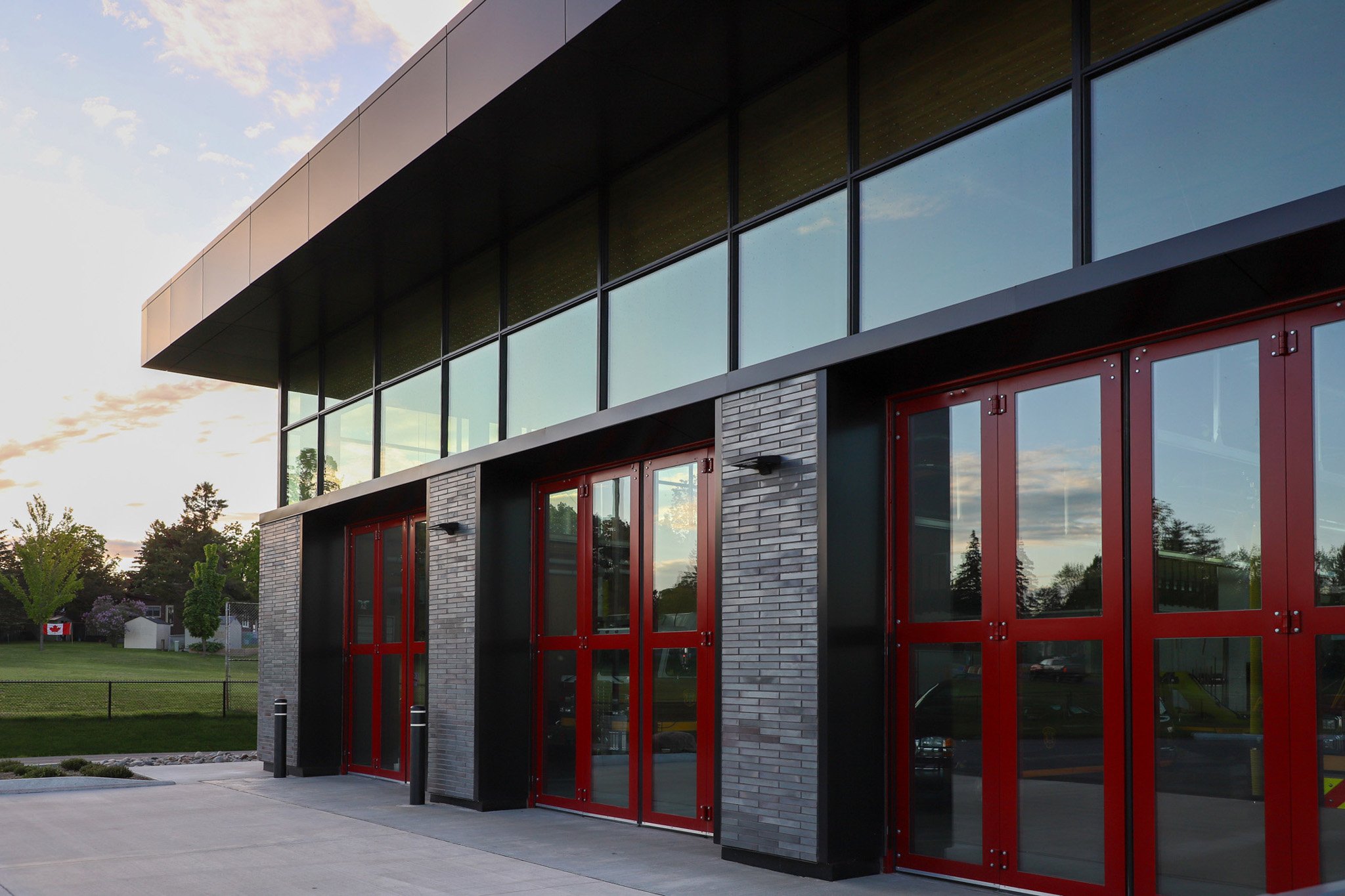
Built for Long-Term Environmental Performance
Environmental performance guided the project from the outset. The City asked for a building that could meet the demands of the future, not just the present. That meant designing for net-zero energy and carbon, long-term resilience, and a meaningful reduction in environmental impact.
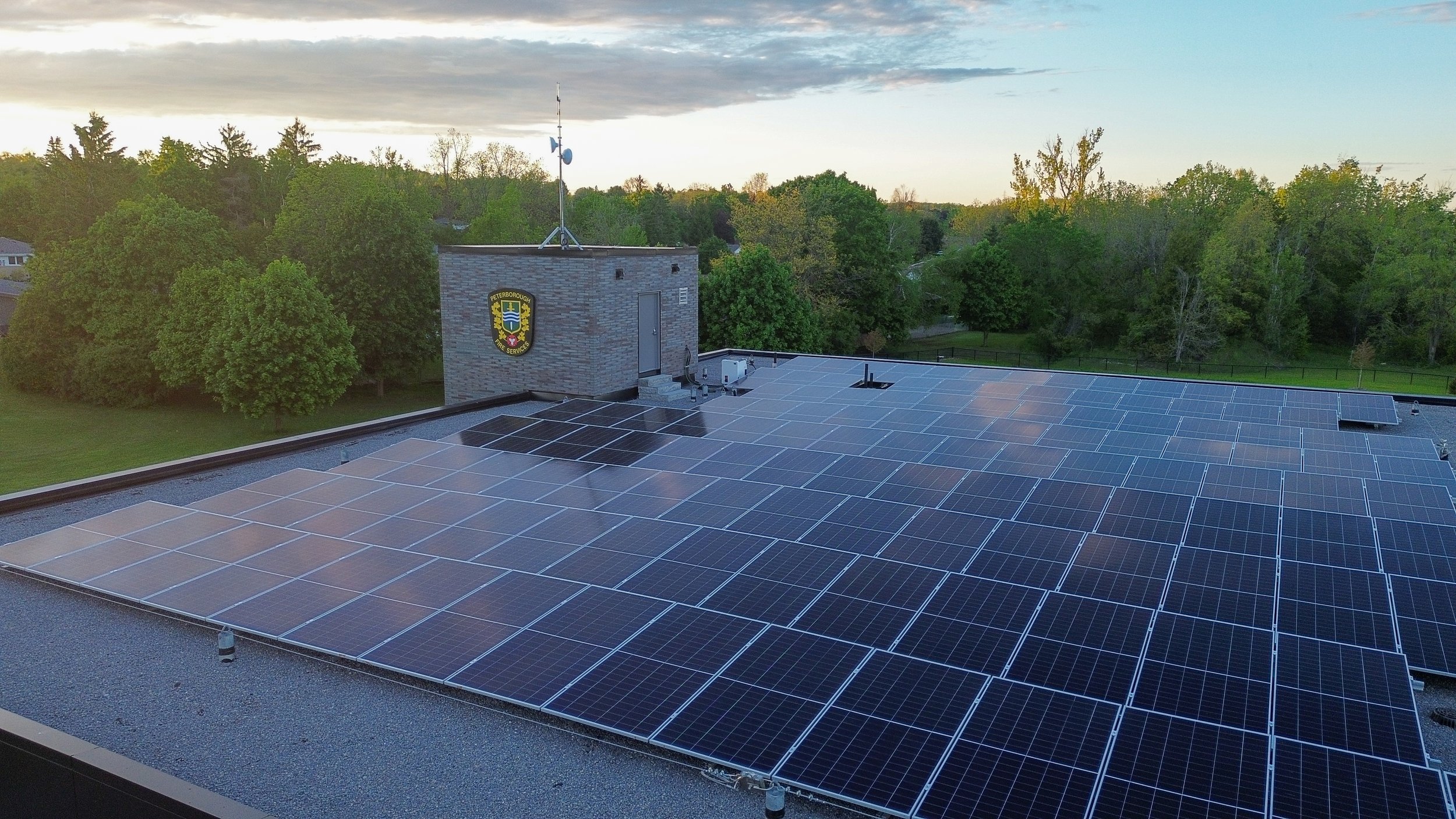
The team began by modelling multiple strategies before choosing an envelope-first approach. Continuous insulation and airtight assemblies reduce energy loss, while geothermal heating and cooling stabilize performance year-round. A 96-kilowatt rooftop solar array offsets the building’s energy use, bringing operational consumption close to zero.
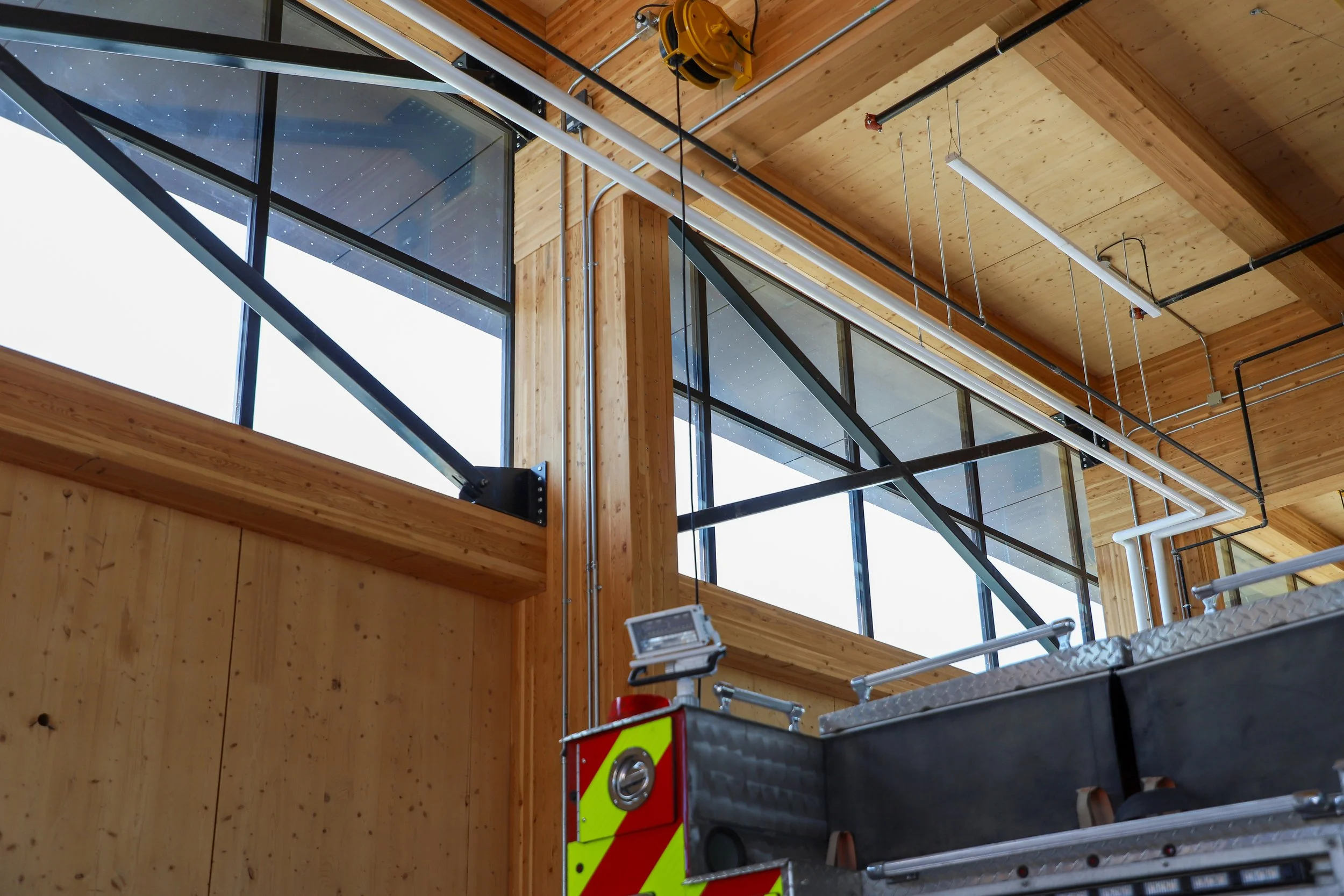
The mass timber structure does important work too. It reduces embodied carbon and gives the building its warm, tactile character. Outside, the site was handled with care. Mature trees were preserved. The landscape was reconnected to the adjacent park. Stormwater strategies support the health of the surrounding ecosystem.
Together, these decisions create a civic building that gives back more than it takes and sets a new benchmark for emergency response facilities in Ontario.